
The Capacity Problem No One Is Measuring
Why institutional capacity — not innovation — is the real competitive advantage in volatile environments. A practical framework for managing load, recovery, and organizational coherence.

Blockchain Does Not Replace Regulation
Blockchain secures ledgers, not legitimacy. Explore why technical infrastructure can never replace human regulatory capacity in the digital age.
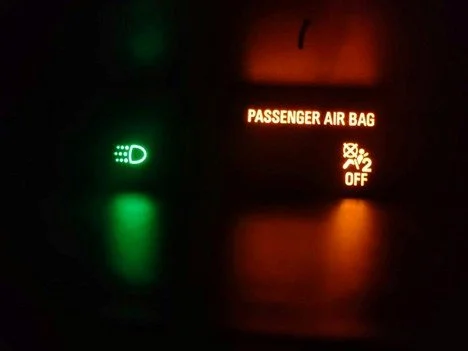
When Institutions Misread Their Own Warning Lights
SUS (Part 3) Why organizations fail when they suppress emotional signals—mistaking regulatory feedback for weakness instead of intelligence.

Beyond Bitcoin
Moving beyond digital scarcity to systemic coherence. Explore why the next evolution of blockchain isn't just about "number go up," but about integrating cybernetic feedback loops, measuring true contribution, and regulating human behavior to create stable, energy-based value systems.

When Systems Grieve
When institutions lose the capacity to hold weight, the stress doesn't vanish—it migrates into the nervous systems of the people inside. Understanding "structural trauma" is the first step in diagnosing why our modern world feels so personally exhausting.

The Bitcoin Delusion - Why We Blame the Tool Instead of the User
Bitcoin arrived with a remarkably narrow promise. It did not claim it would fix inequality. It did not claim it would prevent speculation. It did not claim it would make people wiser, fairer, or more cooperative.

AI Didn’t Break Work — It Exposed What We Never Measured
For decades, we treated work as a combination of skill, effort, intelligence, and motivation. When people struggled, the explanation was personal. When systems failed, the fix was procedural. What was never formally accounted for was the regulatory load placed on the human nervous system.

Regulation Is a Capacity, not a Trait
ERC #4 - A clear pattern has emerged in strained institutions: As systems lose coherence, regulatory burden migrates downward. Policies become ambiguous, decisions stall, contradictions multiply.

The Hidden Cost of Institutional Overload
Emergency departments are not collapsing because clinicians don’t care or aren’t trained. They’re collapsing because demand volatility + staffing attrition + administrative burden have exceeded what the system can regulate.

Sadness, Grief, and the Energy of Letting Go
Sadness is often treated as something to overcome, fix, or move past quickly. But sadness isn’t a malfunction. It’s recognition. It arises when reality no longer matches expectation.
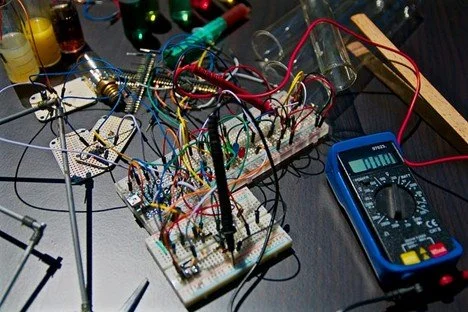
Why Insights Fail Without Capacity
FER #2 - A person may clearly understand their triggers, patterns, and needs — and still be unable to act differently. Not because they lack motivation, but because their nervous system is already overloaded.

Fear Is Information, not a Threat
The Intelligence of Emotion (Part 2) - Seen clearly, fear is part of a healthy regulatory system. It isn’t an order. It isn’t a verdict. And it isn’t a flaw.

The Human Dividend: What AI Didn’t Change
Automation isn’t new. What’s new is our attempt to outsource judgment.

Emotion as Data, Not Disorder
ERC #3 - Emotion is not a malfunction of the human system. It is one of its primary data streams.

Anger Isn’t the Problem. It’s the Question.
The Intelligence of Emotion (Part 1) - When we don’t have enough context, the mind fills in the blanks — and it usually fills them in using past experiences, old wounds, or worst-case assumptions.

What We Reward Shapes What We Become
Most systems don’t fail because of bad intentions. They fail because of what they reward.

Assertive Behavior: The Balanced Path Between Passive and Aggressive
ERC Bridge #1 - Assertiveness is not a personality trait. It is a capacity, and mindfulness is one of the most reliable ways to develop it.

Stress Is Not the Enemy — Dysregulation Is
ERC #2 - Stress is a natural biological and psychological response to demand. It is the body’s way of saying: something matters here.

Why Regulation Fails in High-Information Environments
ERC #1 - Why more data, faster systems, and smarter tools are making humans less regulated — not more.

WHAT EXACTLY IS STRESS? The Missing Link Between Breath, Regulation, and Emotion
When stress remains unresolved, it does not disappear. It transforms. Very often, it transforms into emotion.